
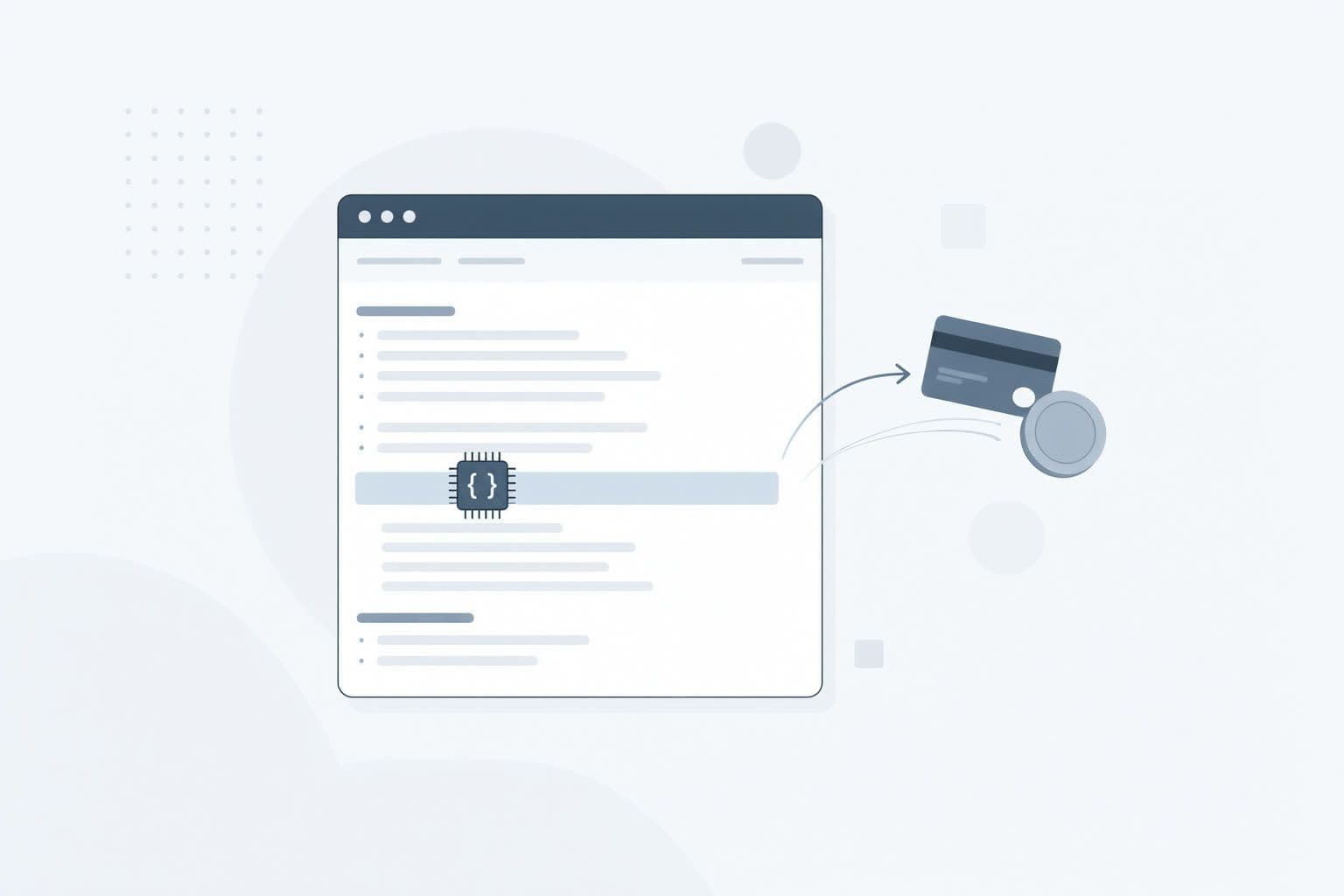
How a payment API actually works
At a basic level, integrating a payment API means your backend sends an HTTP request — usually a POST — to the provider's endpoint, with details like the amount, currency and a payment method reference. The provider handles the parts you should never touch directly, like raw card numbers, and returns a response telling you whether the payment succeeded.
Most modern payment APIs are REST APIs, which means they use standard HTTP methods and JSON payloads. That is deliberate: it means any backend language or framework that can make an HTTP call — Node, Python, Ruby, PHP, Java, whatever your stack is — can integrate without a special SDK, though most providers offer client libraries to make it faster.
Beyond the initial charge, a well-built payment API also sends webhooks: asynchronous notifications that tell your backend when something changes after the fact — a delayed bank transfer clears, a dispute is opened, a subscription renews. Building against webhooks instead of polling is what makes an integration feel real-time rather than laggy.
Payment API vs payment gateway vs payment processor
These three terms get used interchangeably, which causes confusion. A payment gateway is the piece of infrastructure that securely captures and transmits payment details between your checkout and the banks — think of it as the encrypted pipe. A payment processor is the entity that actually moves the money between the customer's bank and the merchant's account. A payment API is simply the interface you, the developer, use to talk to that infrastructure — it is how the gateway and processor expose their functionality to your code.
In practice, most providers bundle all three: you integrate one API, and the gateway and processing happen behind it without you needing to manage separate relationships. That is the model one.ooo uses. If you want the deeper distinction between gateway and processor specifically, our payment gateway guide walks through it in plain terms.
What a good payment API should include
Not all payment APIs are built the same, and the gaps usually show up after you have already started integrating. A few things worth checking before you commit engineering time:
Clear documentation. You should be able to find authentication, endpoints, request and response shapes, and error codes without opening a support ticket. Webhooks for every state change, not just the initial charge — captures, refunds, disputes and payouts should all fire events. A sandbox environment so your team can build and test without moving real money. Support for the payment methods your users expect — cards, but increasingly local rails and digital wallets too, depending on your market. Payout capability, if your product needs to send money out as well as take it in — this matters a lot for marketplaces and platforms. And transparent, predictable pricing with no setup fee or monthly minimum buried in the fine print, so you can model unit economics before you write a line of code.
When you need more than a basic API: embedded finance
A simple payment API is enough if your app just needs to charge a customer and confirm the result. But if you are building a marketplace, a SaaS platform, or any product where your own users need to accept payments or receive payouts through your interface, you are in embedded finance territory.
Here the payment API becomes the plumbing for a much bigger set of flows: onboarding sub-merchants, splitting funds between parties, running batch payouts, and holding balances across currencies. This is where an all-in-one platform saves real engineering time — instead of stitching together a payment API, a separate payout provider and a currency conversion service, one integration covers all of it. Our embedded finance guide goes into how this works for platforms and SaaS products specifically.
ONE's payment API for developers building in Singapore
If your product touches Singapore — whether that is your entire market or one leg of a broader expansion — one.ooo offers a REST API that covers card payments, PayNow, hosted checkout and payment links from a single integration, plus API-triggered payouts and batch disbursements for platforms. It is built to simplify payments for teams that would rather spend engineering time on their product than on reconciling multiple providers.
The multi-currency account behind the API supports 13 currencies, so a platform collecting revenue in one currency and paying out in another does not need a separate FX tool bolted on. Full endpoint and webhook documentation is available in the payment API for Singapore guide, which covers pricing and supported payment methods in more depth.
Important Information
ONE Payments Pte. Ltd. (UEN 202324291R) is registered in Singapore and operates as a technology and merchant services platform. The payment API, documentation, payout and multi-currency capabilities described on this page are provided by ONE Payments; payment processing, fund holding and settlement of regulated payment activities are carried out by the licensed regulated partner named above. Information on this page is provided for general guidance only and does not constitute financial, legal or regulatory advice. Please confirm the latest pricing and available services when onboarding. Contact the ONE Payments team for details.