
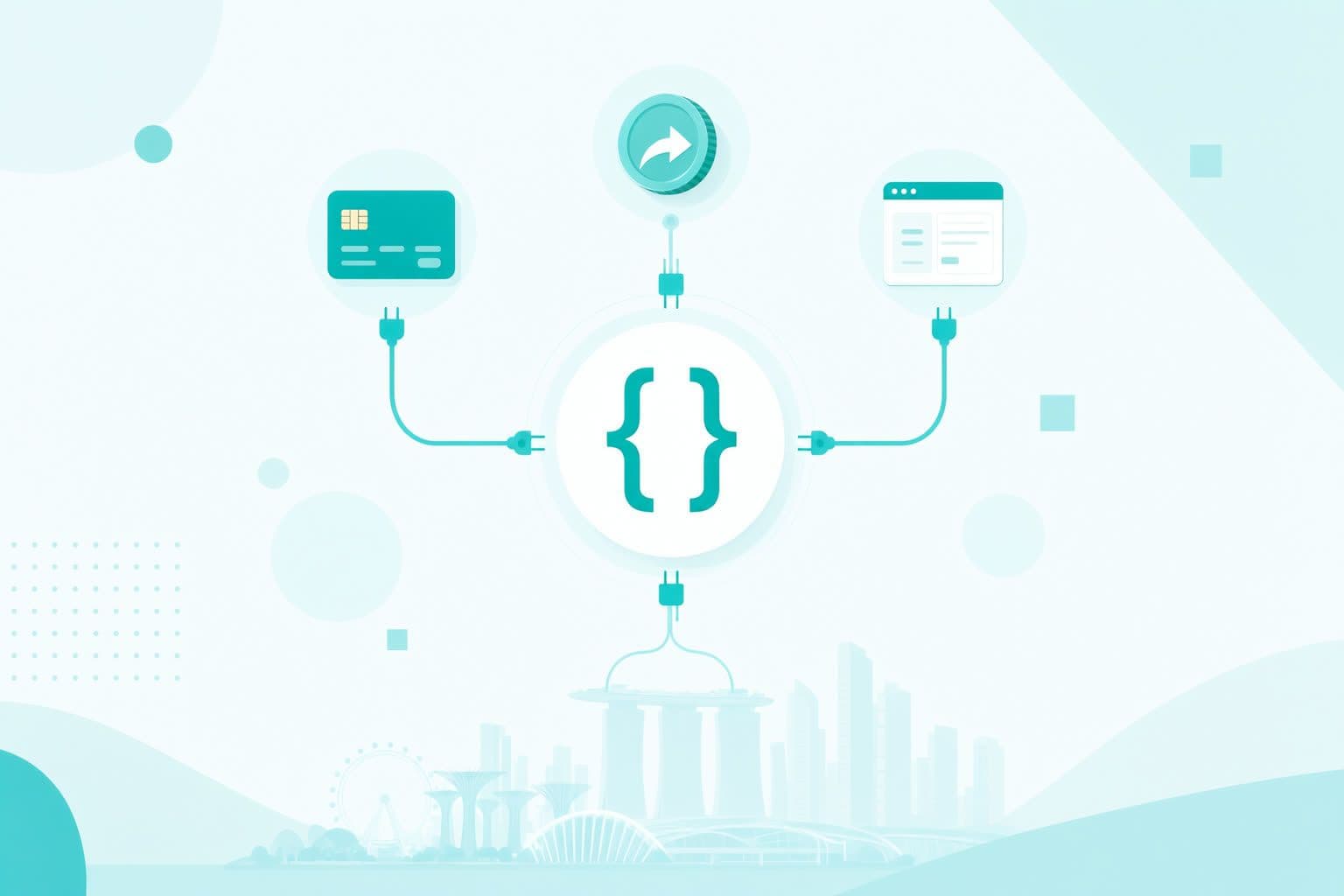
What the ONE payment API lets you do
The ONE payment API is a REST API, so it works with any backend language or framework that can make HTTP requests. Once you are connected, you can accept card payments from Visa, Mastercard, American Express, JCB and UnionPay, as well as Apple Pay and Google Pay for fast mobile checkout. For Singapore customers, PayNow lets shoppers pay directly from their banking app — no card details required.
Beyond simple card acceptance, the API also powers payment links and hosted checkout pages. Payment links are useful when you want to collect payment without a full storefront — send a link by email, WhatsApp or SMS and the customer pays through a ONE-hosted page. Hosted checkout gives you a fully managed payment page you can redirect to, keeping PCI scope minimal. Both options sit alongside the direct API so you can mix and match depending on what each part of your product needs. Full documentation is available at the one.ooo developer docs to help you get started quickly.
Payouts and embedded finance for platforms
For marketplaces, SaaS platforms and any business that pays out to third parties, the ONE payment API supports API-triggered disbursements alongside batch payouts. That means you can automate seller settlements, contractor payments or subscription refunds directly from your platform code rather than logging into a dashboard and running manual transfers.
Embedded finance takes this a step further. If you are building a product where payments are part of the experience — not just a checkout bolt-on — ONE's API lets you embed payment acceptance and payout flows inside your own interface. Your users see your brand; the payment infrastructure runs underneath. This is particularly useful for SaaS tools serving SMEs, marketplace operators who need to split funds between buyers and sellers, and any platform where payment velocity matters. Because all of this runs through the same REST API and the same dashboard, your engineering team has one integration to maintain rather than several.
How ONE's API pricing works
ONE keeps pricing straightforward so you can model your costs before you build. There is no setup fee and no monthly fee — you only pay per successful transaction. Domestic card payments cost 2.7% plus USD 0.50 per transaction. International cards, where the customer's card was issued outside Singapore, add 0.7% on top, making the rate 3.4% plus USD 0.50. PayNow and payment links run through the same card-rate structure depending on the underlying method.
When currency conversion is involved — for example, a customer paying in a currency other than SGD — FX conversion is charged at 1.00% above the interbank rate. For payouts, a local outgoing transfer costs USD 2.00. ONE's business account supports 13 currencies (SGD, USD, AUD, CAD, CHF, CNY, EUR, GBP, HKD, JPY, NOK, NZD, SEK), which means platforms handling cross-border payouts can hold and move funds without converting unnecessarily. For higher transaction volumes, custom rates are available — contact the ONE sales team to discuss what fits your expected monthly volume.
Documentation and integration experience
A payment API is only as good as its documentation. ONE provides developer documentation covering authentication, endpoints, request and response shapes, webhook events and error handling. The docs are designed to get a typical integration running quickly — not to hide complexity behind marketing language.
The REST structure means standard HTTP tools work out of the box: curl, Postman, or whatever HTTP client your team already uses. Webhooks let your backend react to payment events in real time — authorisations, captures, disputes and settlement notifications — without polling. For teams that prefer a managed checkout experience, the hosted checkout and payment link options reduce the amount of frontend code you need to write and keep your PCI footprint small. If you run into questions during integration, the ONE team is available to walk through your setup. You can review the full developer documentation at one.ooo/documentation or reach out directly to discuss your use case.
Choosing the right payment API setup for your business
Not every integration looks the same. A direct API integration gives you the most control — you design the checkout UI, handle tokenisation and manage the payment flow end to end. It is the right choice when you need a custom experience or want payments deeply embedded in your product. The trade-off is more development work upfront.
Hosted checkout and payment links are faster to ship. You redirect the customer to a ONE-hosted page, they pay, and you get a webhook confirming the result. For many SMEs and early-stage products, this is the all-in-one approach that gets you live in hours rather than days. You still get access to the same payment methods — cards, PayNow, Apple Pay, Google Pay — and the same fee structure. As your product grows, you can migrate to a deeper integration without changing providers. The payment gateway guide covers these trade-offs in more detail if you are still deciding which path fits your roadmap.
Important Information
Regulated payment services are provided by Airwallex (Singapore) Pte. Ltd., a MAS-licensed Major Payment Institution under the Payment Services Act 2019. ONE Payments acts as a technology provider and merchant service facilitator.
ONE Payments Pte. Ltd. (UEN 202324291R) is registered in Singapore and operates as a technology and merchant services platform. The payment API capabilities, developer documentation, hosted checkout, payment links, payouts and embedded finance features described on this page are provided by ONE Payments. Payment processing, fund holding and settlement of regulated payment activities are carried out by the licensed regulated partner named above. Information on this page is provided for general guidance only and does not constitute financial, legal or regulatory advice. Fees and features quoted are current at the time of writing — please confirm the latest pricing and available services for your specific business when onboarding. Contact the ONE Payments team for details about your integration.