
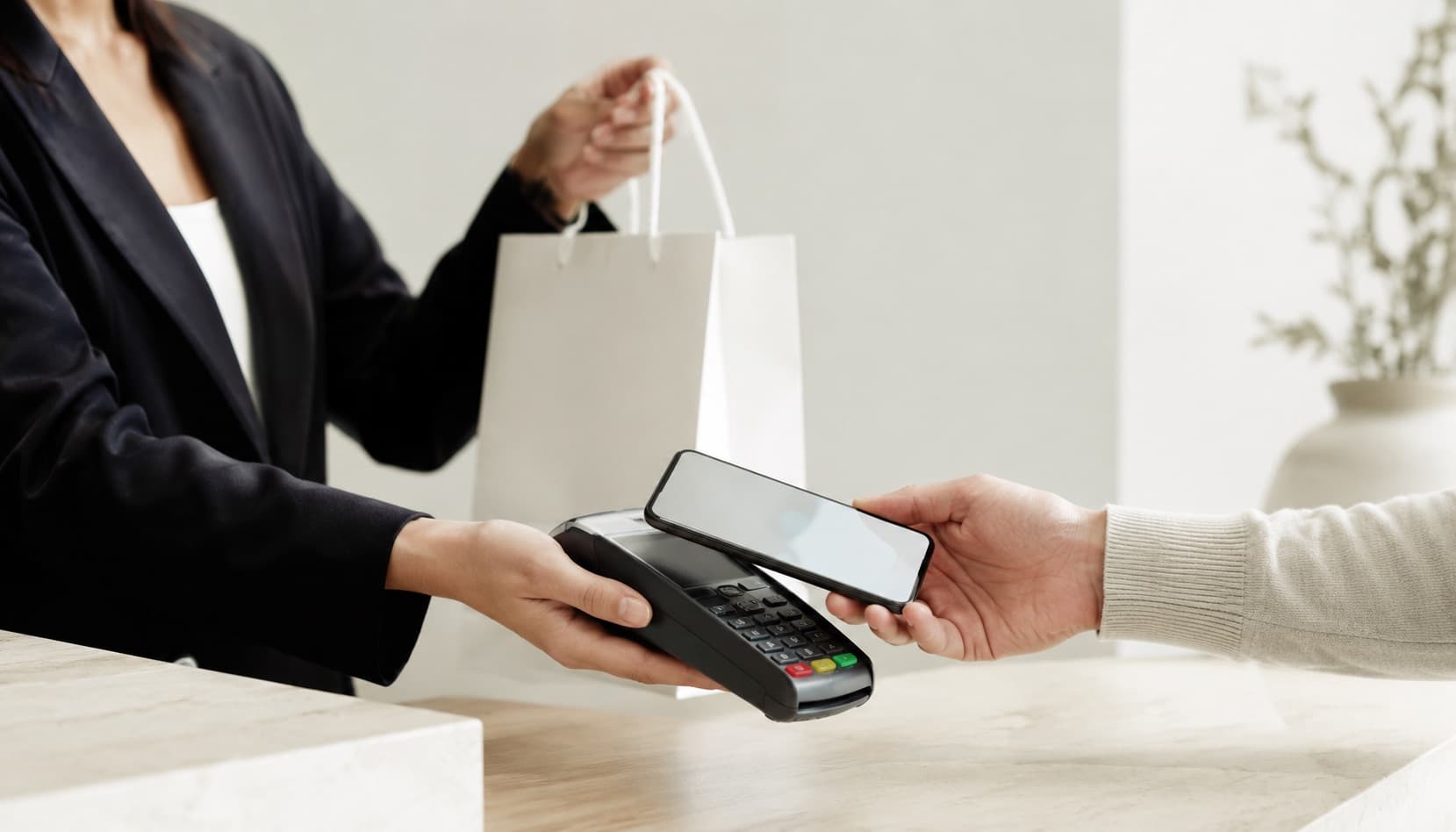
What is payment processing?
Payment processing is the sequence of steps that authorises and settles a financial transaction between a customer and a merchant.
Four parties are involved in every card transaction:
- Merchant: your business, accepting payment for goods or services.
- Payment processor / PSP: the technology provider that connects your checkout to the card networks and acquiring banks. This is the party you integrate with directly.
- Card network: Visa, Mastercard, Amex, UnionPay, JCB — the networks that set interchange rules and route authorisation requests between the acquiring bank and the issuing bank.
- Issuing bank: the customer's bank, which holds the funds and approves or declines the transaction.
For non-card methods — bank transfers, digital wallets, PayNow — the flow is similar but bypasses the card networks. The PSP still handles the connection between your checkout and the payment rail.
What your business sees is simpler: you integrate once with a payment provider, and they handle the complexity of connecting to networks, managing authorisation responses, and settling funds to your account.
How payment processing works
A payment transaction moves through the following steps, typically completing in under three seconds:
- Customer submits payment: the customer enters card details or selects a digital wallet at your checkout. Your checkout page — hosted by your PSP or built on their API — captures and tokenises the payment data.
- Authorisation request: your PSP sends an authorisation request to the card network, including the transaction amount, currency, and a tokenised reference to the card.
- Card network routes the request: the card network forwards the request to the customer's issuing bank.
- Issuing bank approves or declines: the issuing bank checks available funds, fraud signals, and card status, then returns an authorisation code (approved) or a decline code.
- Response returned to your checkout: your PSP maps the network response to a normalised result and returns it to your application. The customer sees "Payment approved" or "Payment declined".
- Clearing: at end of day, your PSP batches the day's authorised transactions and submits them to the card networks for clearing.
- Settlement: the card network debits the issuing bank and credits your acquiring bank, minus interchange and network fees. Funds typically arrive in your settlement account within one to three business days depending on the PSP and settlement currency.
For local payment methods like PayNow, steps 2–4 go directly between your PSP and the local payment rail rather than through a card network, but the merchant experience is the same.
What your business needs to start accepting payments
To accept payments, your business needs three things:
1. A merchant account or PSP relationship
A merchant account is a type of bank account that receives funds from card transactions before they settle to your main business account. Traditional merchant accounts require a separate application with an acquiring bank. Modern payment service providers (PSPs) bundle the merchant account with their platform — you sign up with the PSP and they handle the acquiring relationship on your behalf.
For most businesses getting started, a PSP is simpler than a standalone merchant account. You get a single integration point, a combined dashboard, and settlement handled by the provider.
2. A checkout integration
You need a way to collect payment details from your customers. PSPs typically offer two paths:
- Hosted checkout: the PSP provides a pre-built payment page. Your customers are redirected to it (or it loads as an overlay). PCI scope is minimal because your servers never handle raw card data.
- API integration: you build the checkout UI yourself and use the PSP's API to process payments. More control over the customer experience, but requires development work and stricter PCI compliance handling.
For businesses with a development team, the API path gives full control over the checkout flow. See the one.ooo API documentation for integration guides, code examples, and SDK references.
3. Compliance basics
Card payments require adherence to PCI DSS (Payment Card Industry Data Security Standard). The level of compliance required depends on your integration method and transaction volume. Hosted checkout integrations typically qualify for the simplest SAQ A self-assessment. API integrations require more rigorous compliance documentation. Your PSP will provide guidance on your specific requirements.
Payment methods for APAC businesses
Card payments (Visa, Mastercard, Amex, UnionPay, JCB) are the baseline for any business accepting online payments. But APAC markets have strong adoption of local payment methods that customers prefer — and offering only cards will cost you conversions.
Singapore
- PayNow: real-time bank transfer via the PayNow network. Widely used by Singapore consumers and businesses. No card required — customers pay directly from their bank account using a mobile number, NRIC, or UEN.
- NETS: local debit scheme used at point-of-sale across Singapore. Relevant for physical retail.
Digital wallets
GrabPay and other regional wallets have significant adoption across Southeast Asia. For businesses with an APAC customer base, wallet support directly affects checkout conversion.
Cross-border and international cards
For businesses serving customers outside Singapore, acceptance of international card brands across APAC geographies matters. Approval rates for cross-border card transactions vary by acquirer and card BIN — this is where smart routing across multiple PSPs adds value.
one.ooo supports cards (Visa, Mastercard, Amex, UnionPay, JCB), PayNow, digital wallets, and SWIFT international transfers through a single integration. See the documentation for the full list of supported payment methods and regional availability.
How to choose a payment processor
When evaluating payment processors for your APAC business, the following criteria matter most:
Fee structure transparency
Payment processing fees come in several forms: interchange (set by card networks, passed through), PSP margin, currency conversion, and settlement fees. Look for providers that present fees clearly and without hidden components. The one.ooo pricing page shows a straightforward breakdown of processing fees by payment method.
APAC payment method coverage
Check whether the PSP supports the specific payment methods your customers use — not just international card schemes but local rails like PayNow and regional wallets. Coverage gaps mean lost conversions.
Integration quality
Evaluate the quality of the API documentation, SDK support, and sandbox environment before committing. A clean integration experience saves significant development time. Review the one.ooo API documentation to assess integration depth and available libraries.
Multi-PSP flexibility
If your business processes meaningful volume or operates across multiple APAC markets, consider whether you want to route transactions across more than one PSP — for redundancy, approval rate optimisation, or fee reduction on specific card types. Payment orchestration sits above the PSP layer and enables this flexibility without rebuilding your checkout. Read the payment orchestration guide for an explanation of how it works and when it makes sense.
Support and onboarding
Evaluate the onboarding process and ongoing support model. For APAC merchants, local team availability and familiarity with the regional regulatory environment matter.
Getting started with one.ooo
one.ooo provides an integrated payment platform for APAC merchants: a single API connecting card payments, digital wallets, PayNow, and international transfers — with a unified dashboard for transaction reporting, reconciliation, and settlement management.
For online businesses: integrate via the REST API or use a hosted checkout for minimal integration effort. Code examples and SDK references are available in the documentation.
For businesses with a physical presence: POS terminal support is available for Singapore merchants alongside the online payment stack, giving a single reporting view across online and offline channels.
For platforms and marketplaces: the API supports merchant onboarding and payment flows for multi-merchant setups.
To discuss your specific setup and get an integration estimate, contact the one.ooo team.
Important Information
ONE Payments Pte. Ltd. (UEN 202324291R) is registered in Singapore and operates as a technology and merchant services platform. The integration, dashboard, reporting, and routing capabilities described on this page are provided by ONE Payments. Payment processing, fund holding, and settlement of regulated payment activities are carried out by the licensed regulated partner named above. Information on this page is provided for general guidance only and does not constitute financial, legal, or regulatory advice. Merchants should review the applicable terms and conditions, and confirm the payment methods and services available for their specific business, when onboarding. For details about your setup, contact the ONE Payments team.