
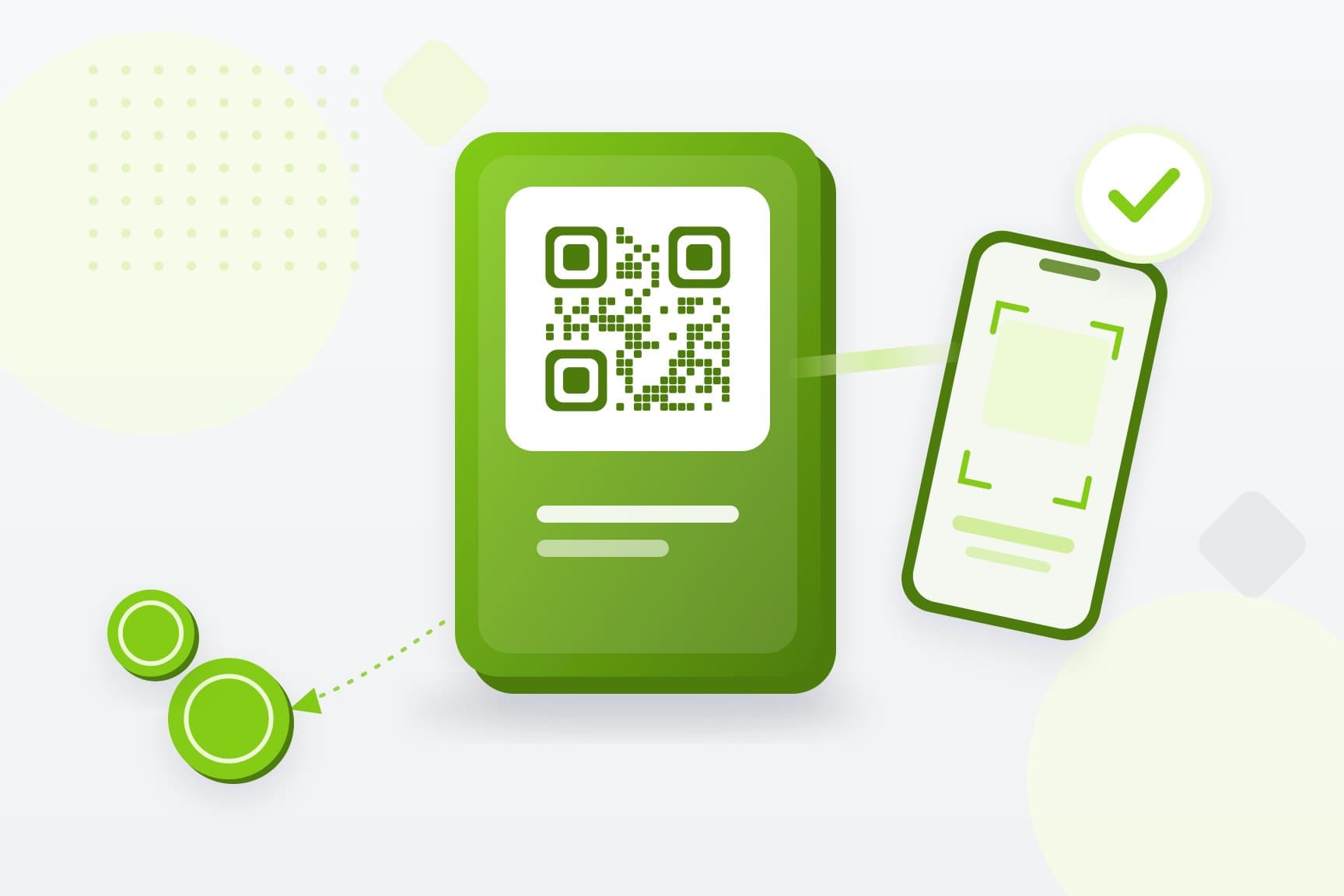
What is PayNow and how does it work
There is no separate PayNow app to download. The service sits inside the apps of participating banks and selected e-wallets. In the industry those e-wallet providers are called major payment institutions, or MPIs. The Association of Banks in Singapore (ABS) says banks launched PayNow on 10 July 2017, and e-wallets joined on 8 February 2021.
It works by linking an identifier, called a proxy, to an account:
- People link their mobile number or NRIC/FIN to a bank or e-wallet account.
- Businesses and other organisations link their UEN.
- A virtual payment address (VPA) links a mobile number to an e-wallet. The person can keep a separate PayNow registration with their bank.
To pay, someone enters the proxy or scans a PayNow QR code, and their app finds the account behind it. The money then moves through FAST, the system Singapore's banks use for instant transfers. PayNow runs around the clock, every day of the year.
Before confirming, the payer sees the display name of whoever they are paying. So the customer can check the money is going to the right place.
In November 2026, MAS and ABS published a roadmap for the next stage, PayNow Generation 2. It includes clearer rules on refunds, disputes and scams for payments to merchants, and wider QR acceptance through SGQR+.
PayNow UEN and PayNow Corporate
PayNow Corporate is the version for organisations. It launched on 13 August 2018. It covers businesses, companies, government agencies, associations and societies. Each one links its UEN to a bank or e-wallet account, and can then receive and send Singapore dollars instantly.
The UEN is the standard identification number of an entity registered in Singapore. The Ministry of Finance compares it to the NRIC: what the NRIC is for a citizen, the UEN is for a registered entity. Businesses and companies registered with ACRA use their ACRA registration number as their UEN, and that includes sole proprietorships and partnerships.
Using the UEN has two benefits. Customers can pay you without knowing your bank account number. And before paying they see the display name linked to your UEN, so they can check they are paying your business.
How to register your UEN for PayNow
You register once, and you do it with your bank or e-wallet provider, not with a government agency. ABS says organisations register online on their bank's or MPI's platform, or contact the institution for help. Every bank's screens look different, but the steps are much the same:
- Make sure you have a business account with a bank or e-wallet that takes part in PayNow.
- Sign in to that bank's business internet banking or app.
- Look for PayNow or PayNow Corporate registration. It is usually under payments or account services.
- Choose the account the money should go to, and confirm your UEN.
- Test it. Ask someone to send a small amount to your UEN, and check which name appeared on their screen.
ABS lists every participating bank and e-wallet on its PayNow page, with contact details for each one. If you cannot find the registration option, call your bank.
How customers pay your business
A customer can pay a business by PayNow in two ways:
- They open the PayNow transfer screen in their banking or wallet app, type your UEN, then the amount.
- They scan a PayNow QR code, or an SGQR label that shows PayNow. If the code has no amount in it, they type the amount.
Then they check your name and confirm. The money is in your account within seconds.
The main risk at the counter is a fake payment. Some people show a doctored or old screenshot that looks like a successful payment. The Monetary Authority of Singapore advises merchants to check for a notification that the payment succeeded before handing over the goods. If you use a code from your bank, that means checking your own banking app, not the customer's phone.
A business can use two kinds of code, and our guide on how to generate a PayNow QR code explains both.
Is PayNow free for business?
PayNow is free for individuals. For a business, it depends on the bank. Each bank sets its own charges for PayNow Corporate and lists them in its business pricing guide. Most charge for each payment you send. Some also list a charge for payments you receive, which may be waived for a while. Charges and waivers change, so read your own bank's current guide.
Whichever bank you use, ABS states that businesses are prohibited from imposing surcharges on consumers for PayNow transactions. You cannot charge customers extra for paying by PayNow.
If a terminal or an online checkout takes PayNow for you, that provider's charges are set out in your quote.
Three ways to take PayNow as a business
Straight to your bank account, with a code from your bank:
- The money reaches your business account in seconds.
- A fixed code from your bank usually has no amount in it, so customers type it themselves.
- You match each transfer to a sale yourself, in your bank app.
- To refund someone, you make a new transfer from your account.
On a payment terminal:
- The terminal makes a new PayNow QR code for each sale, with the amount in it.
- The terminal shows when the payment has succeeded, so staff do not need to check a phone.
- PayNow shows up in the same reports as your card sales.
- The provider pays your takings out to you later, not the moment the customer pays.
Online, through a checkout or a payment link:
- The customer chooses PayNow and scans a code made for that order.
- The checkout records the payment when it arrives, so the order shows as paid.
- It works on a website, on an invoice, or for an order taken over WhatsApp.
A bank code is enough for a market stall or a tutor taking a few payments a day. At a busy counter or in an online shop, a code made for each sale saves a lot of checking. Plenty of businesses use both.
PayNow with ONE
ONE helps Singapore businesses take PayNow next to cards and wallets, both at the counter and online.
- ONE Mini shows a PayNow QR code on its screen and says each successful payment out loud.
- ONE Pro takes cards by tap and by chip, plus QR payments, and has a built-in printer.
- ONE Tap takes contactless cards and QR payments on an NFC-enabled Android phone, with no extra hardware.
- Online, PayNow is one of the payment methods on ONE's hosted checkout and payment links.
Every code is made for one payment and one amount, and the result goes back to the terminal or checkout. Your payments and settlement reports are in the merchant portal. Settlement usually comes the day after the transaction. Timelines depend on the payment method, and yours are confirmed during onboarding. ONE does not issue accounts or hold funds: payment services are provided through licensed payment partners.
Which methods you can offer depends on your device and your type of business, and the final list is confirmed during onboarding. Read how in-store payments and online payments work with ONE, compare the payment terminals, or talk to us for a quote.