
What a Merchant Acquirer Actually Does
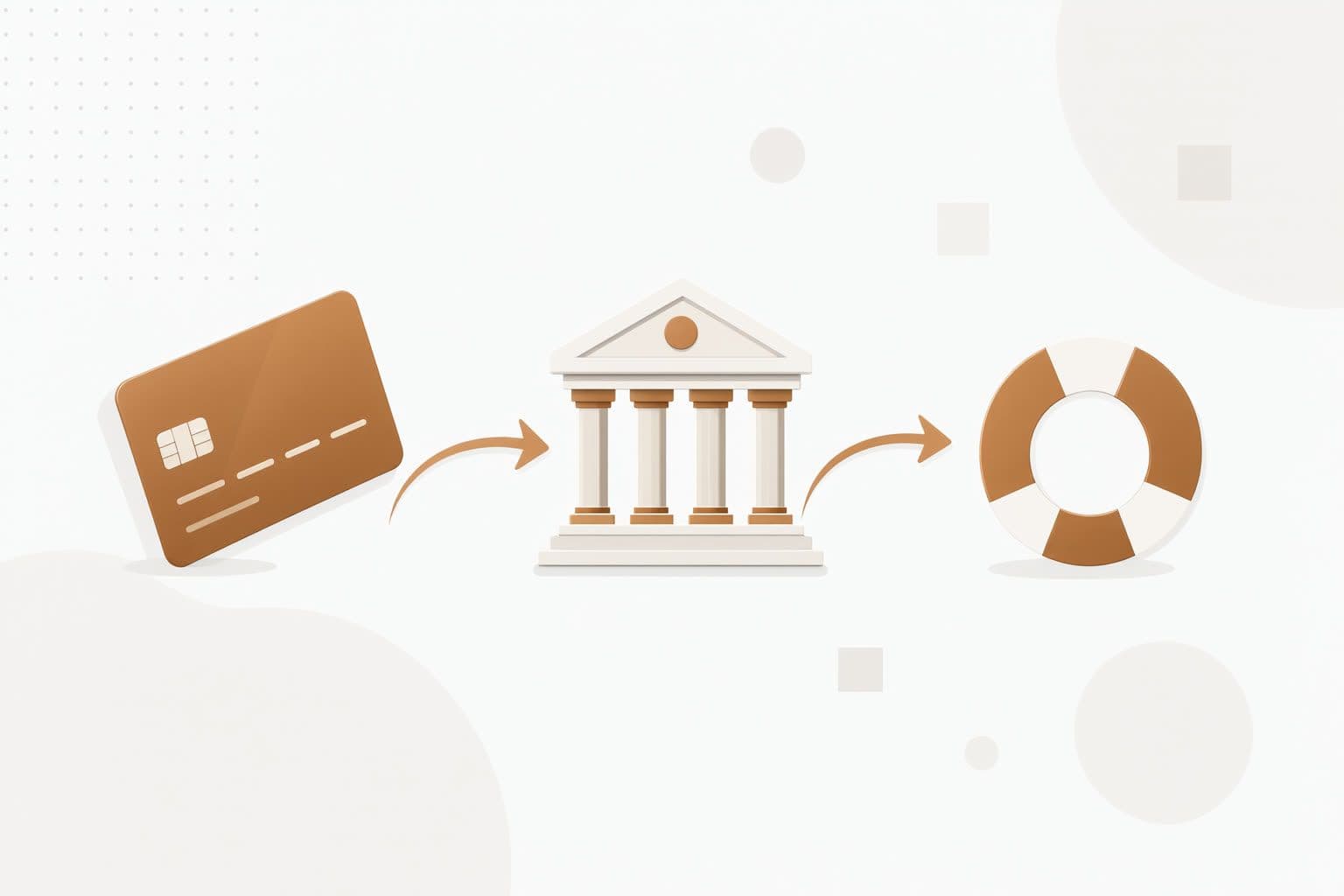
A merchant acquirer is a bank or licensed financial institution that has a direct relationship with a card network — Visa, Mastercard, Amex, and so on — and uses that relationship to process card payments on behalf of merchants like you. When a customer pays by card, the acquirer is the party that receives the authorisation request, forwards it to the card network, and ultimately credits the funds to your settlement account after the transaction clears.
In practical terms, the acquirer takes on real financial risk: if a customer disputes a transaction or a batch of chargebacks exceeds what your account can cover, the acquirer is liable to the card network. That risk is why acquirers underwrite merchants — they review your business type, your expected transaction volumes, and your chargeback history before approving you. It's also a key reason why acquiring relationships have traditionally been difficult for small or new businesses to access on their own.
How Authorisation, Clearing, and Settlement Work
Every card payment passes through three distinct stages, and the acquirer is involved in all of them. Authorisation happens in seconds: your payment gateway sends the transaction details to the acquirer, who forwards them through the card network to the customer's issuing bank. The issuer checks the available balance or credit limit and sends back an approval or decline. Clearing happens later — usually at end of day — when transaction records are batched and sent through the card network to reconcile what each party owes whom. Settlement is the final step: the issuer sends the funds through the network to the acquirer, who deposits them (minus fees) into your merchant account.
The whole cycle typically takes one to three business days for the money to appear in your account, though some acquirers offer faster settlement windows. Interchange fees set by the card networks, plus the acquirer's own margin, are deducted before funds reach you — which is why understanding fee structures matters for any business processing significant card volume.
Merchant Acquirer vs Payment Gateway vs PSP
These three terms get mixed up constantly, so here's a quick way to keep them straight. A payment gateway is the technology layer — the secure pipe that encrypts card data and carries authorisation requests between your checkout and the acquiring bank. The gateway doesn't hold money or take on credit risk; it just moves data. A merchant acquirer is the financial institution that actually processes the payment and holds your settlement funds. A payment service provider (PSP) or payment facilitator bundles both functions — and often adds card network connectivity on top — so that merchants get a single contract instead of arranging a gateway and an acquiring relationship separately.
For most small and mid-sized businesses in Singapore, working directly with a standalone acquirer isn't practical: you'd need to meet volume minimums and negotiate contracts with each card network. PSPs and all-in-one platforms solve this by aggregating merchants under their own master acquiring agreement, which is why they're now the dominant model for businesses getting started with card acceptance.
Acquirer vs Issuer: The Two Sides of Every Transaction
If the acquirer is on the merchant's side, the issuer is on the cardholder's side. The issuing bank is the one that gave your customer their credit or debit card — it holds their account, sets their credit limit, and decides in real time whether to approve or decline a transaction. When your customer disputes a charge, the issuer manages that process from their end (a chargeback), and your acquirer manages it from yours.
Card networks like Visa and Mastercard sit in the middle, setting the rules both sides must follow and providing the messaging infrastructure that connects issuers to acquirers globally. The interchange fee — the largest component of most card processing fees — flows from the acquirer to the issuer as compensation for the credit risk the issuer takes on. Understanding this split helps explain why international cards typically carry a higher fee than domestic cards: the interchange rate on a foreign-issued card is usually higher, and your acquirer passes that cost through to you. For a full breakdown of how these two roles compare, read our acquirer vs issuer guide.
How ONE Payments Simplifies Merchant Acceptance
ONE Payments is an all-in-one technology platform that gives Singapore businesses a cost-effective way to accept payments without needing to manage separate acquiring relationships, gateways, or hardware contracts. Online, ONE Payments supports Visa, Mastercard, Amex, JCB, UnionPay, Apple Pay, Google Pay, and PayNow — as well as payment links and hosted checkout for businesses that want a quick no-code setup, plus a REST API for deeper integrations. In person, the platform covers credit and debit cards, NFC contactless, and QR-code wallets through POS terminals you can purchase or rent — currently available in Singapore.
Settlement is available in 13 currencies (SGD, USD, AUD, CAD, CHF, CNY, EUR, GBP, HKD, JPY, NOK, NZD, SEK). Card processing starts at 2.7% + USD 0.50 for domestic cards and 3.4% + USD 0.50 for international cards, with no setup or monthly fee. Volume discounts are available for businesses with higher transaction throughput — contact the sales team to discuss. The goal is to simplify payments into a single dashboard so you spend less time managing infrastructure and more time running your business.
For more on how payment gateways work in Singapore, including what to look for when choosing a provider, see our dedicated guide.
Important Information
Regulated payment services are provided by Airwallex (Singapore) Pte. Ltd., a MAS-licensed Major Payment Institution under the Payment Services Act 2019. ONE Payments acts as a technology provider and merchant service facilitator.
ONE Payments Pte. Ltd. (UEN 202324291R) is registered in Singapore and operates as a technology and merchant services platform. The integration, dashboard, reporting and merchant acceptance capabilities described on this page are provided by ONE Payments. Payment processing, fund holding and settlement of regulated payment activities in relation to merchant acquiring are carried out by the licensed regulated partner named above. Information on this page is provided for general guidance only and does not constitute financial, legal or regulatory advice. Fees quoted are current at the time of writing — please confirm the latest pricing and the services available for your specific business when onboarding. For details about your setup, contact the ONE Payments team.